
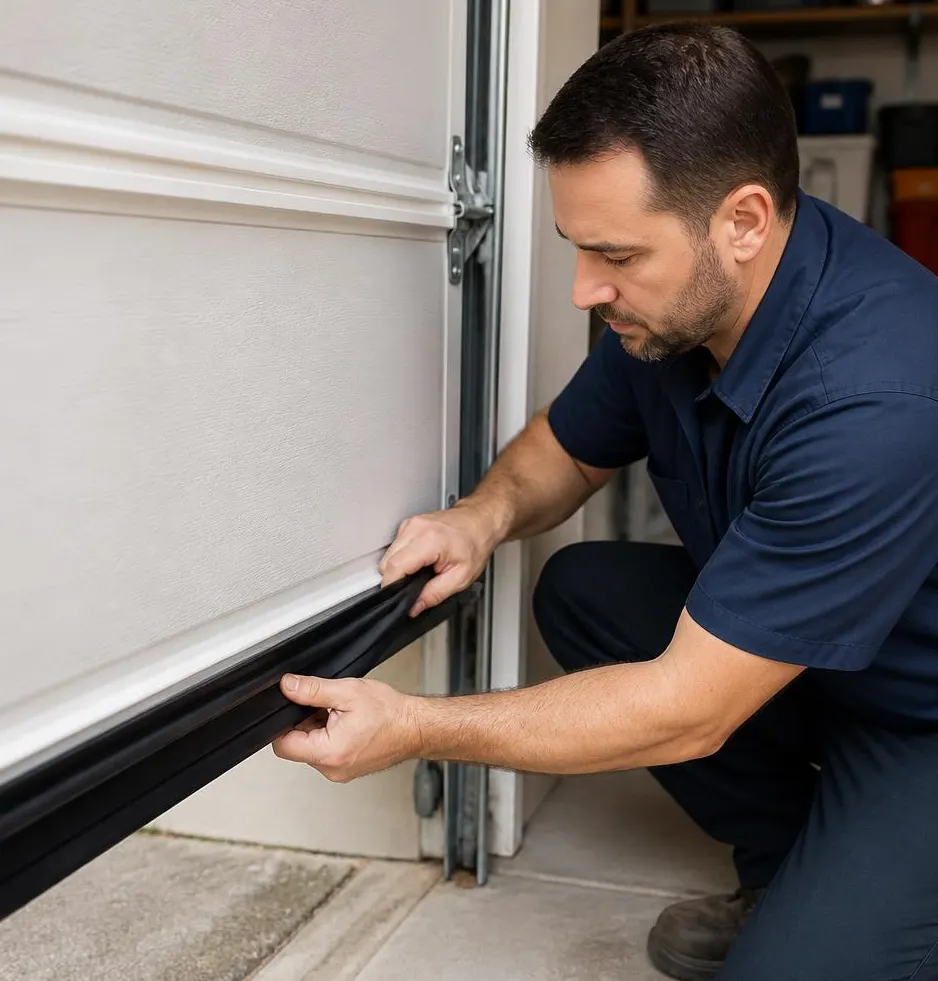
For most homes in Cambridge, WI, insulated steel is the right call. It holds up to road salt, deep cold, and spring mud better than the alternatives, costs less to maintain, and comes in enough styles to match almost any house. That said, the other materials each have a real place depending on your garage, your budget, and how much upkeep you're willing to do. Here's how they actually stack up once winter gets involved.
What This Climate Actually Tests
Before comparing materials, it helps to know what you're testing them against. Cambridge winters bring deep cold snaps, heavy snow, ice buildup, and months of road salt splashing up from plowed driveways. Spring brings thaw and mud, which means moisture sitting against the bottom of the door for weeks at a time. Summer brings humidity and storms. A good garage door material needs to resist corrosion from salt, avoid warping or swelling from moisture, keep some insulation value against the cold, and not become brittle or crack when temperatures drop well below freezing.
Steel
Steel is the standard for a reason. Quality steel doors are galvanized and finished with a baked-on or powder coat layer that resists the rust road salt would otherwise cause. Insulated steel doors (look for polyurethane or polystyrene core) add real R-value, which matters if your garage is attached to the house or you use it as a workspace. Steel won't warp in humidity and won't crack in extreme cold the way some other materials can.
The trade-offs: steel can dent from a stray basketball or a bumper tap, and if the finish gets scratched down to bare metal, rust can start at that spot, especially where salt spray collects near the bottom panels. Routine touch-up paint and keeping the bottom seal in good shape handles this.
Wood
Wood doors, especially carriage-house styles, give a look that steel and composite try to imitate. Real wood insulates reasonably well and can be a strong curb-appeal choice on older or farmhouse-style homes common around here.
The downside is maintenance load. Wood absorbs moisture during humid summers and the spring thaw, which leads to swelling, warping, and eventually cracking as it dries back out. It needs refinishing every couple of years to stay protected, more often if it faces west or gets direct weather. Wood is also heavier than steel, which puts more strain on springs and the opener, so those components need to be sized correctly. If you love the look and are willing to keep up with finish work, wood can last, but it is the highest-maintenance option in this climate.
Aluminum
Aluminum won't rust, which sounds like an advantage in a salt-heavy climate, but it comes with real compromises. It's lightweight, which is useful for oversized commercial doors where weight matters for the opener and track hardware. Full-view aluminum and glass doors also show up on some garages for a modern look.
The problems: aluminum dents more easily than steel, even from minor impacts, and dents don't pop back out the way steel sometimes can. Insulation is poor unless the panels are specifically built with an insulated core, and in extreme sub-zero stretches aluminum can become more brittle at the dent-prone edges. It's a reasonable choice for a detached garage used mainly for storage, or for wide commercial bays, but it's not the first pick for an attached residential garage here.
Fiberglass
Fiberglass doors are built to mimic the look of wood grain while resisting moisture and salt corrosion better than real wood. They won't rot and they hold paint well. For homes near the lake or anywhere humidity is a constant concern, that moisture resistance is appealing.
The catch is cold performance. Fiberglass panels can become brittle in sustained deep cold and are more prone to cracking on impact than steel, particularly around the edges and corners. Fiberglass doors are also less common than steel, which can mean longer waits and higher costs for replacement panels if one gets damaged.
Composite
Composite doors use synthetic resin and wood fiber to get the look of real wood without the swelling, cracking, or repainting cycle. They hold up well across temperature swings, resist moisture from thaw and humidity, and don't need refinishing nearly as often as real wood. Insulation performance is moderate to good depending on the model.
The main trade-off is upfront cost, which typically runs higher than steel. For homeowners who want a wood look but don't want the maintenance commitment, composite is usually the better long-term value than real wood in this climate.
Side-by-Side, in Practical Terms
- Best overall value and durability: insulated steel
- Best wood look with least upkeep: composite
- Best for those committed to maintenance: real wood
- Best for lightweight or wide commercial doors: aluminum
- Best moisture resistance with a wood-style look: fiberglass, with cold-crack caution
When to Call Cambridge Garage Door
If you're replacing a door that's taken a beating from winter after winter, cracked panels, rusted-through spots, or a door so heavy with age that the springs struggle to lift it, it's worth a real evaluation rather than another patch job. We handle garage door installation for all these materials and can walk through which one fits your garage, your house style, and your budget. If your current door just needs a tune-up before winter sets in, our garage door maintenance service checks seals, hardware, and balance so cold and salt don't take a toll before spring.
Give Cambridge Garage Door a call for honest advice and straightforward work, right here in Cambridge, WI.